Examining Volatility Patterns and Their Impact on Accessing Layered Incentive Packages in Interactive Reel Formats
Blake Jenkins · Aug 24, 2026
Examining Volatility Patterns and Their Impact on Accessing Layered Incentive Packages in Interactive Reel Formats
Slot volatility refers to the frequency and size of payouts that occur across interactive reel formats, and researchers have documented clear connections between these patterns and the ways players reach layered incentive packages such as free spin rounds, multiplier ladders, and progressive contributions.
Data from industry monitoring services shows that low-volatility titles produce smaller but more consistent base-game wins, which in turn can accelerate the accumulation of loyalty points or bonus meters that unlock secondary features, whereas high-volatility games concentrate returns in infrequent but larger events that often align with jackpot or incentive triggers only after extended play sequences.
Defining Volatility Categories in Modern Reel Systems
Low-volatility configurations typically return between 20 and 40 percent of total wagers through frequent small payouts, a pattern that industry reports link directly to quicker progression through tiered reward structures because players maintain bankrolls long enough to activate daily or weekly incentive layers.
Medium-volatility reels occupy the middle ground with moderate hit rates and payout sizes, and analysts note that these titles often pair with hybrid incentive packages that blend steady free-spin accumulation with occasional larger bonus rounds.
High-volatility setups, by contrast, allocate the majority of return-to-player percentage to rare but substantial outcomes, and studies indicate that access to the uppermost layers of incentive packages in these games frequently depends on triggering specific symbol combinations during extended dry spells.
Statistical Relationships Between Volatility and Bonus Activation
Research conducted by the Nevada Gaming Control Board and published in quarterly compliance summaries demonstrates that high-volatility titles exhibit bonus trigger rates as low as 1 in 180 spins for top-tier free-spin packages, while low-volatility counterparts activate similar packages at rates closer to 1 in 45 spins.
These differences matter because many layered incentive systems award additional free spins or multiplier upgrades only after a base number of spins or a minimum wager threshold has been reached, so volatility directly influences how quickly players satisfy those conditions.
Figures released in August 2026 by the Australian Communications and Media Authority revealed that operators offering mixed-volatility portfolios observed a 17 percent increase in incentive-package redemptions when players alternated between low-volatility sessions for meter building and high-volatility sessions for jackpot contributions.
Mechanics of Layered Incentive Structures
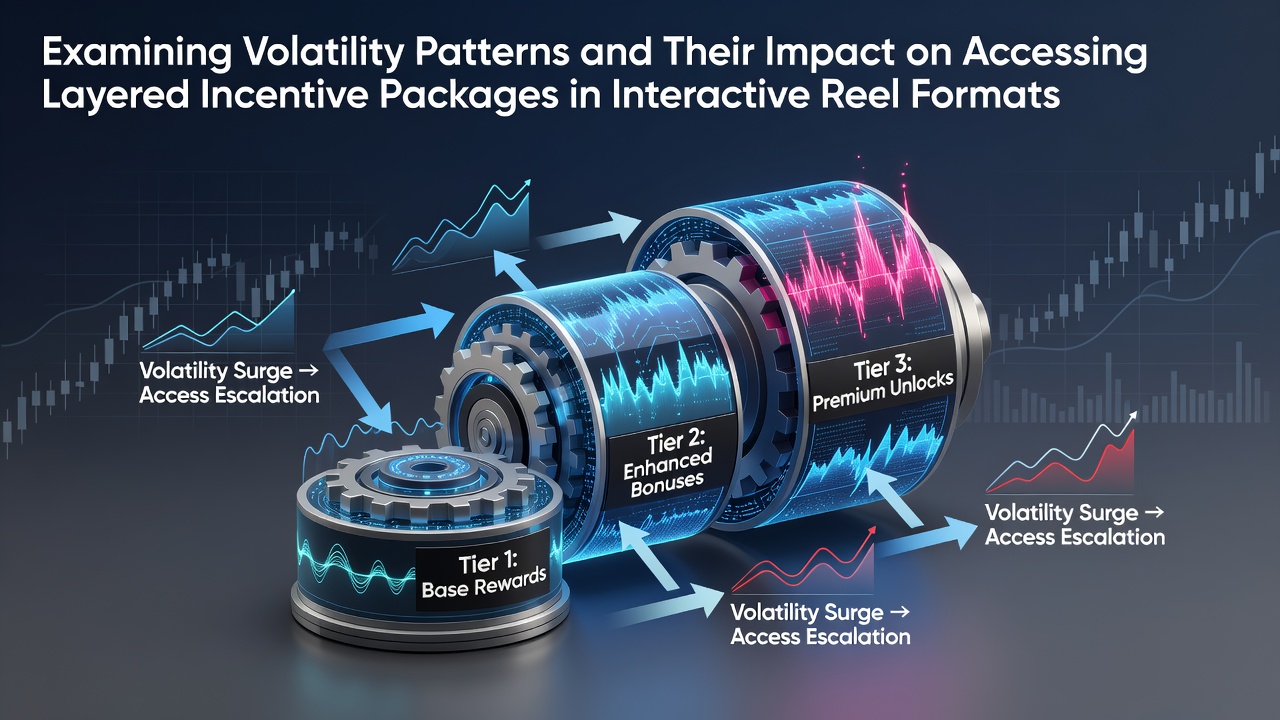
Layered incentive packages in interactive reels commonly include an entry-level free-spin bundle, a mid-tier multiplier ladder, and an upper progressive pool that draws contributions from a percentage of every wager, and the rate at which each layer becomes accessible depends on the underlying volatility curve.
Game mathematics teams design reel strips so that high-volatility titles weight rare symbol combinations more heavily toward the progressive tier, meaning players may experience longer intervals between incentive activations yet receive larger cumulative rewards when those activations occur.

Regional Regulatory Observations on Volatility Disclosure
Canadian provincial regulators, including the Alcohol and Gaming Commission of Ontario, require operators to publish volatility indicators alongside return-to-player percentages, and compliance data indicates that clearer volatility labeling correlates with higher player retention rates across incentive-bearing titles.
Similar requirements appear in the Isle of Man Gambling Supervision Commission guidelines, which emphasize that transparent volatility information helps players anticipate the pacing of layered reward access without altering the underlying random-number-generator integrity.
Academic papers from the University of Nevada, Reno gaming management program have examined session-length data and found that players who select volatility levels matching their bankroll size maintain longer engagement with progressive incentive layers, reducing early termination before upper reward tiers activate.
Practical Patterns Observed Across Operator Portfolios
Operators that segment their libraries by volatility bands report measurable differences in how quickly players progress through incentive milestones, with low-volatility clusters driving faster accumulation of loyalty points that convert into bonus credits, while high-volatility clusters contribute disproportionately to progressive jackpot pools.
One analysis of aggregated play data across European markets showed that sessions beginning on medium-volatility titles produced the most balanced distribution of incentive redemptions across all three layers of typical packages.
Conclusion
Volatility patterns shape the timing and magnitude of access to layered incentive packages in interactive reel formats through measurable differences in hit frequency, payout distribution, and meter progression rates. Regulatory disclosures from multiple jurisdictions continue to highlight these relationships, and ongoing data collection supports the view that informed selection of volatility levels aligns player sessions with desired incentive outcomes across diverse reel systems.